Trees add beauty, shade, and value to your home.
But planting them in the wrong location, especially too close to power lines, can lead to outages, extra trimming, and safety concerns. Choosing the right tree and planting it in the right place helps keep everyone safe and powered.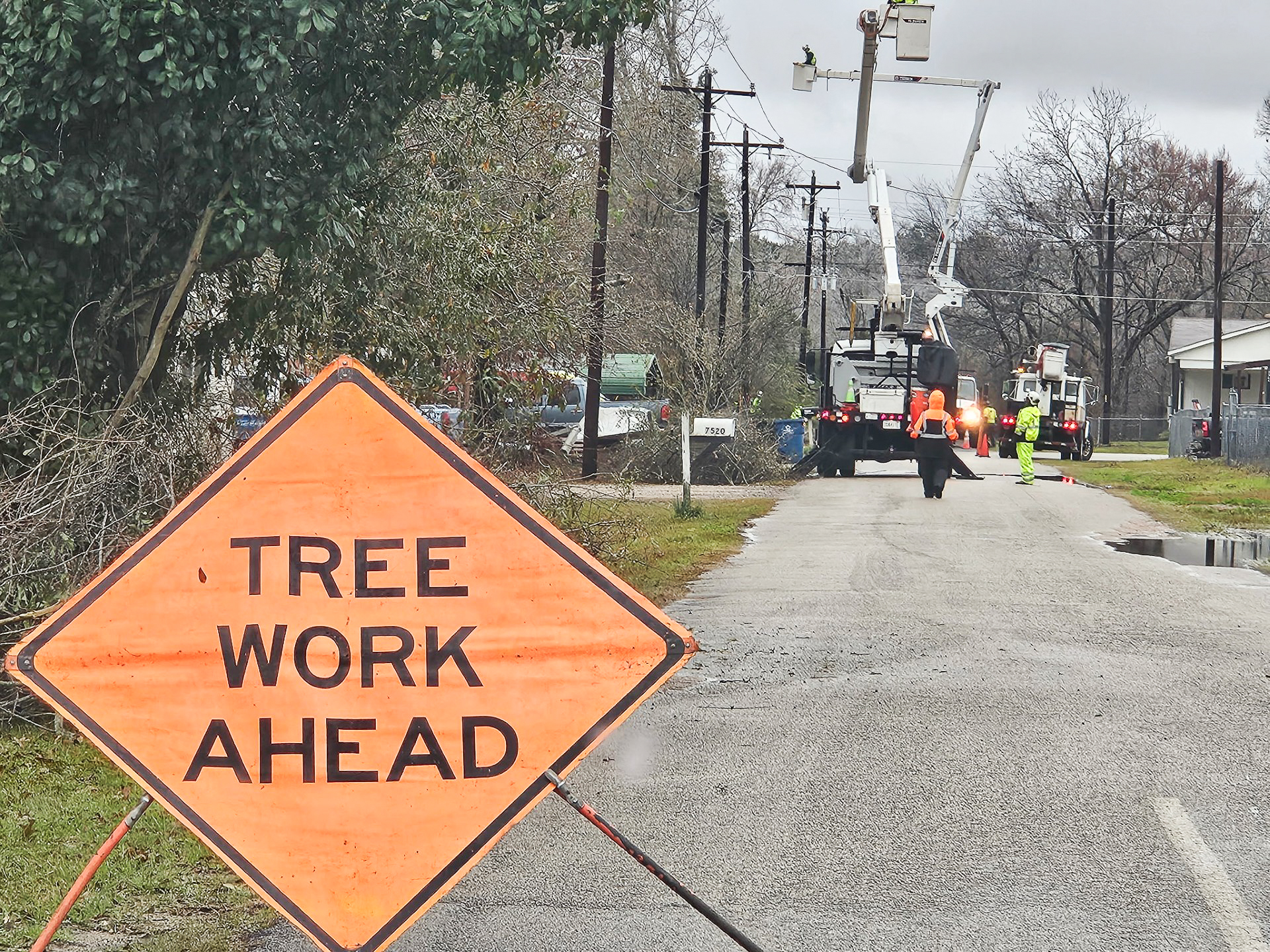
Supporting Reliable Service Through ROW Maintenance
At TVEC, we work year-round to maintain our electric system, including performing Right-of-Way (ROW) trimming maintenance. This important work helps keep trees and vegetation safely clear of power lines to reduce outages and improve reliability, especially during storms and high winds.
While regular trimming helps prevent unexpected service interruptions, proper planting by homeowners is just as important. When trees are planted too close to power lines, they grow into energized equipment over time, requiring more frequent trimming and increasing the risk of outages.
By working together through proactive maintenance and smart planting, we can keep power flowing safely and reliably for our entire community.
How Far Should Trees Be From Power Lines?
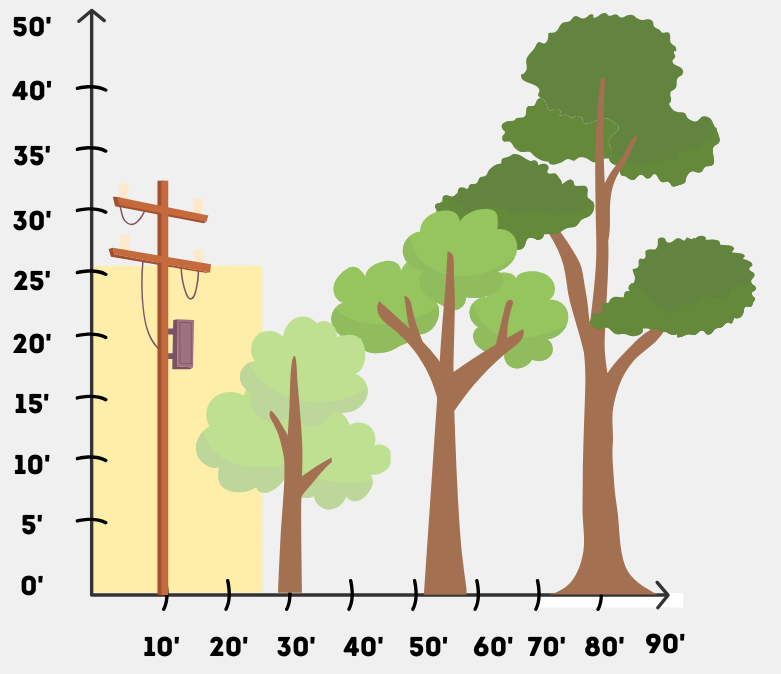
Before planting, think about how tall and wide a tree will grow at maturity — not just how it looks today.
No Tree Zone:
Avoid planting directly beneath power lines. This space should remain clear to prevent future safety hazards and service issues.
Small Trees (under 25 feet tall):
Plant at least 25 feet away from power lines.
Medium Trees (25–40 feet tall):
Plant at least 40 feet away.
Large Trees (over 40 feet tall):
Plant at least 60 feet away.
Large-growing trees such as oak, pecan, pine, sycamore, and cottonwood should never be planted near power lines.
Trees grow taller and wider over time. Planning for their mature size today prevents future trimming concerns and helps protect reliable electric service.
Call Before You Dig
Planting safely also means checking below ground.
Before digging, call 811 at least two business days before planting. This free service locates underground utilities to help prevent damage to electric, gas, water, or communication lines. A simple call can avoid costly repairs and dangerous situations.
When Is the Best Time to Plant?
The best time to plant trees is during fall and early spring, when cooler temperatures and natural rainfall help new trees establish strong roots.
Plan for the Future
Proper planting protects your trees, your property, and your community’s electric service. Combined with ongoing ROW trimming maintenance, thoughtful tree placement helps ensure safe, reliable power for years to come.
Have questions about planting near power lines or our vegetation management efforts? We’re here to help.
View a list of our contractors here.